
Hello and Welcome
However you arrived here — still deciding, or ready to start — this page has what you need. The form below is the fastest way to reach us, and we answer every one.
Getting Started
Tell us a little about yourself, or the person you’re asking for. We’ll call you back to talk it through. No commitment, and no cost for the call.
What Happens Next
- We read it.
- We call you. This is a real conversation, not a scheduling call. We want to understand what is going on before we schedule an evaluation.
- If we are a good fit, we schedule an evaluation. If we are not, we will tell you who might be.
Referrals
We accept referrals from pediatricians, therapists, schools, DHS caseworkers, and families and clients directly. A prescription is not required to start, though some plans — Medicaid among them — do require one.
Use the form above and choose I’d like to refer someone; it arrives at a secure address. You can also email connection@joyousot.team, which is a secure address, or fax us at (501) 904-4409.
Where to Find Us
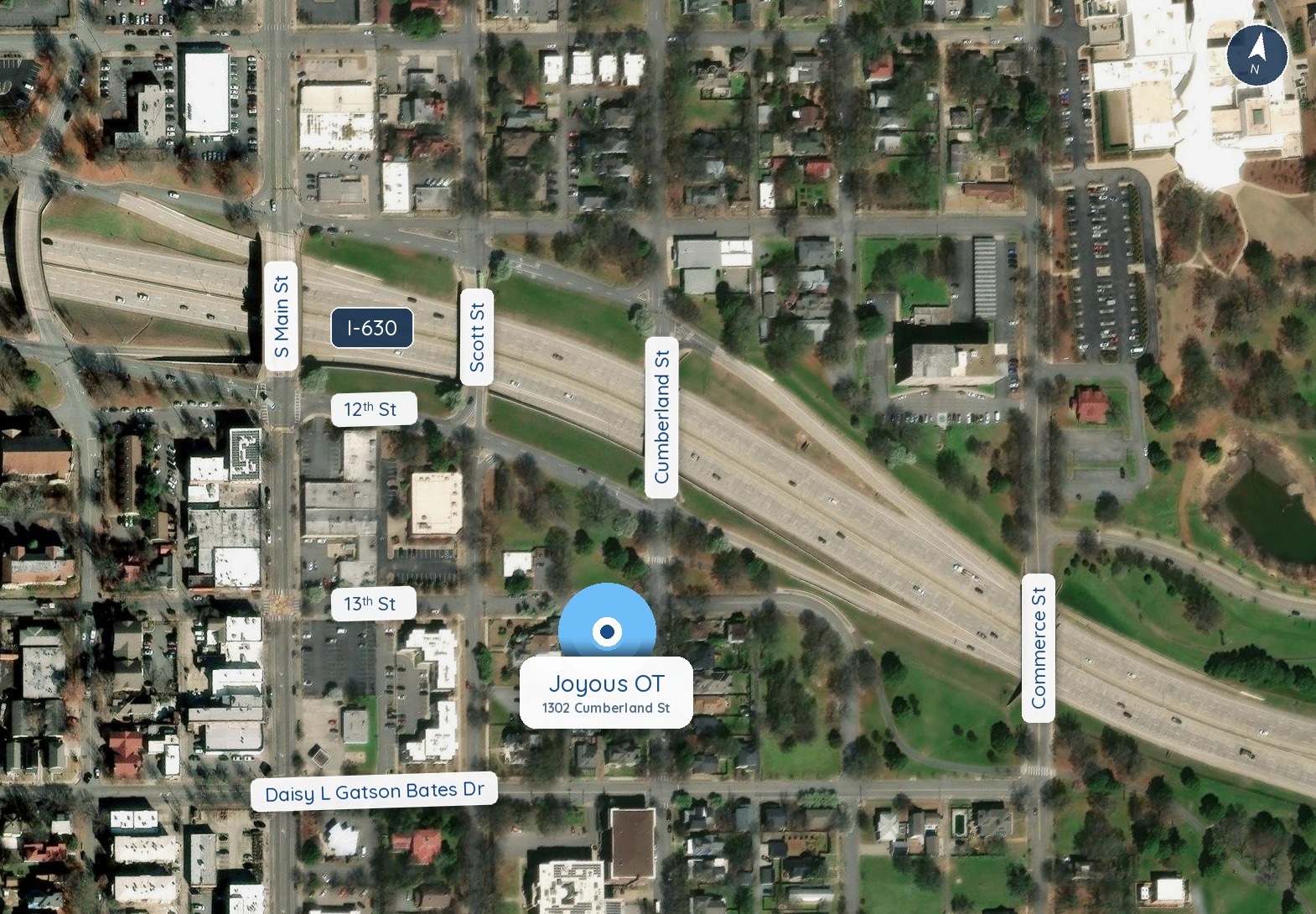
Address: 1302 Cumberland St, Little Rock, AR 72202
Phone: (501) 664-1788
Fax: (501) 904-4409
Hours: by appointment only, Monday–Friday, 8:00 am – 7:30 pm
Frequently Asked Questions
The questions we are asked most. If yours is not here, ask us.
What should I expect during the first and second sessions?
First session — the evaluation. We spend it understanding the person in front of us: what is hard, what is working, what you want to be different. That means talking, some assessment, and a good deal of watching how someone moves and plays and responds.
Second session — the first treatment. We start putting the plan into practice. With children that usually looks like play. With teens and adults it starts with regulation — how the body settles, and what stops it. From there it builds around what is actually happening between sessions.
How do I schedule an appointment?
Use the form at the top of this page, or call us. Either way, we’ll be in touch to confirm and walk you through what comes next.
Do I need a referral or a prescription?
Not to start. A prescription is not required to begin with us.
Some plans do require one. Medicaid and all four PASSEs need a DMS-640. That is not a form you fill in yourself — your primary care doctor signs it. Ask your doctor’s office for the DMS-640; they will know it, and they can fax it straight to us at (501) 904-4409.
If you have another plan and your insurer asks for a referral or a prescription, the same applies: your primary care doctor can send it to us directly, by fax or to connection@joyousot.team.
Everything else
Do you accept insurance?
We are credentialed with:
- Arkansas Blue Cross Blue Shield
- Blue Cross Blue Shield Federal Employee Program
- Arkansas Medicaid
- Empower Healthcare Solutions (PASSE)
- Summit (PASSE)
- CareSource (PASSE)
- Arkansas Total Care (PASSE)
We are credentialed on Medicaid, and by extension on all four of the PASSEs.
We are working through credentialing with additional plans, so if yours is not on the list, ask us — it may already be in progress. We can also provide a superbill if you would like to file out of network.
How soon can we schedule therapy after the evaluation?
After the evaluation we write the evaluation report, and it goes into your client portal once it is signed. We contact you to schedule your follow-up sessions once that report is finalised.
How long does therapy usually go on for?
It depends on the person.
We look at what is hard in daily life, and then at what sits underneath it. We work at that foundational level rather than at the level of the symptom, which is why the answer is not the same for everyone. Some people meet their goals quickly. For others it takes longer, and new goals often appear along the way — as someone becomes more aware of themselves, they start noticing things that were always hard but that they had no way of naming, because their own experience was the only one they had ever had. That is progress, not a setback.
Can parents be involved in sessions?
Yes, and we would rather you were. Parents are part of the work, not an audience for it. All of our therapists are trained in therapeutic parenting, so what happens in a session stays on the same page with the adults at home, and we will give you strategies to use in the hours between sessions.
Who do you work with, and what does that look like?
Children, teens and adults.
With children, sessions look like play — that is deliberate, and it is how children do their most serious work. With teens and adults we work on regulation, and on the effects an early disruption is still having on daily life. We work with the family around the person as well, not only the person alone.
Every plan is built for the individual. There is no standard programme here.
What is occupational therapy?
Occupational therapy helps people do the things that make up a day.
It is a very broad field — occupational therapists work in hospitals, schools, homes and clinics, on everything from handwriting to recovering after an injury — which is part of why the name so rarely explains itself.
Our corner of it is narrow: attachment disruption and developmental trauma. That is a small specialty and not a well-known one, so if you were referred here and are not quite sure what we do, that is a reasonable place to be. What we work on is the daily-life difficulty that grows out of a start that was harder than it should have been.
How does that help with attachment disruption or developmental trauma?
Early relationships teach a nervous system whether it is safe to settle. When those relationships were interrupted — by trauma, by separation, by a start that never allowed it to feel safe — the body often stays on alert long after the danger has passed.
That shows up as emotional overwhelm, difficulty with other people, or behaviour that looks like defiance and is actually fear. We work at that level: safety first, then regulation, then the relationships around the person. Not the behaviour on its own.
Where are you, and where do I park?
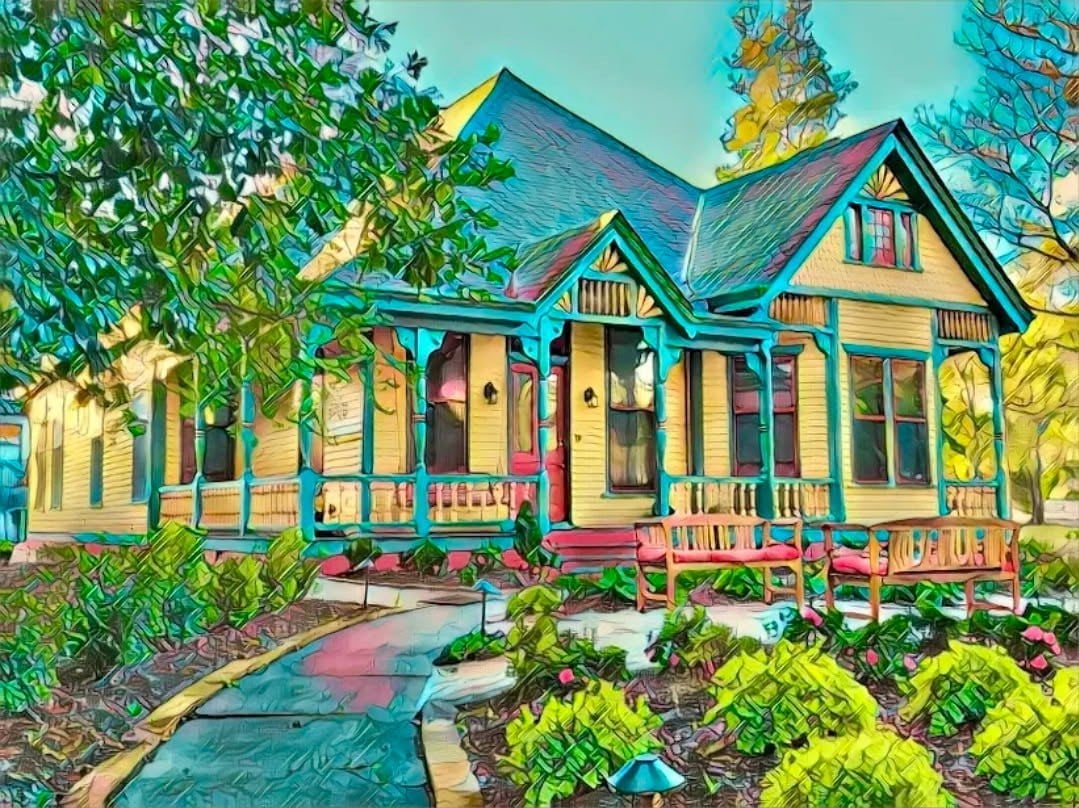
We are at 1302 Cumberland Street, on the corner of 13th and Cumberland — an historic home, two blocks from Community Bakery.
Clients may park on the street on either side of either road, along 13th or Cumberland, and there is usually plenty of room. There is accessible parking at the back of the building. It is a quiet mixed neighbourhood rather than a business district: mostly houses, with a veterinary clinic and a park on the block to the north. If you are picturing one-way streets and tall buildings downtown, it is not that.
What are your hours?
By appointment only, Monday to Friday, 8:00 am to 7:30 pm.
How can I get in touch if I have another question?
Use the form at the top of this page, or call us. There is no question too small.
Still Wondering About Something?
Ask us. There’s no question too small, and we would rather answer it now than have you wondering.